
Section 1 Section 2 Section 3 Section 4 Section 5 Section 6 Section 7
01/ Commercial Solar
We engineer foundation systems suited to the site’s geotechnical conditions and structural demands.
Generate. Save. Decarbonise. Lead the energy transition.

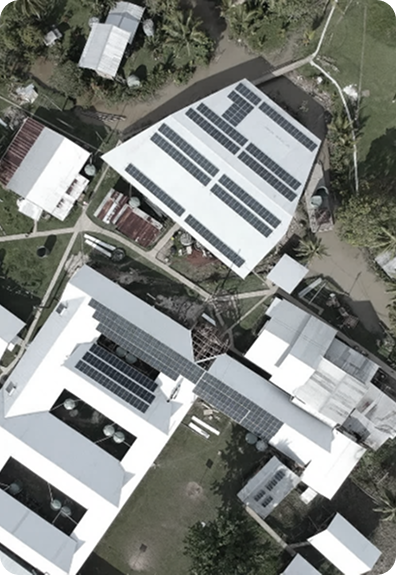
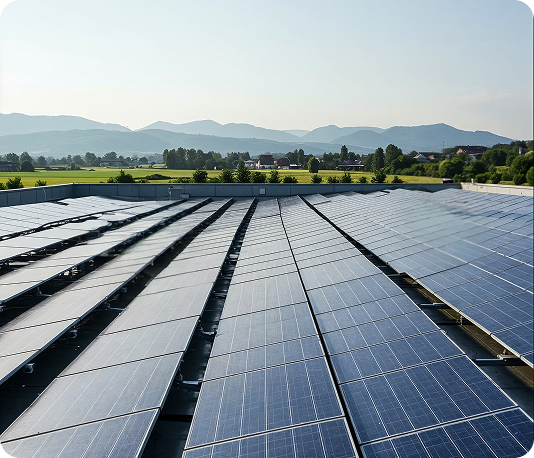
eqrenewable delivers engineered solar systems for government, institutional, commercial and industrial facilities requiring long-term performance and full regulatory assurance. Each project is delivered under our ISO-certified EPC framework covering feasibility, engineering, construction, and digital lifecycle management to ensure maximum operational and financial returns.

Commercial Advantages

Parameter

Typical Range / Impact

Lower Operating Costs

Reduce grid energy use by 25–40 %, providing predictable long-term energy expenses

Energy Security

Maintain operations during grid instability through optimised solar generation and optional battery integration

Sustainability Leadership

Support Net-Zero and ESG targets with measurable COβ‚‚ reduction and public reporting data

Reliability & Safety

Tier-1 equipment and certified installations reduce faults, downtime, and maintenance cost

Asset Value Uplif

Improve NABERS and Green Star ratings, increasing property and organisational value

Financial & Performance Metrics

The indicative figures help evaluate and estimate the potential savings, payback period and environmental impact achievable through commercial solar investment.

Parameter

Typical Range / Impact

System Size

30 kW – 5 MW (roof, ground, or canopy)

System Size

1 200 – 1 700 kWh per kW installed.​

System Size

3–5 years (faster with VEEC, STC, and LGC benefits).​

Annual COβ‚‚ Offset

~1 000 t per MWp installed​

Performance Ratio (PR)

Maintained between 80 – 85 % through digital monitoring.

Built for Enduring Partnerships

Our difference lies in precision, compliance and accountability across every stage of project delivery. Each system is engineered for long-term performance, not short-term installation ensuring measurable value and enduring reliability.

Every system is designed and reviewed by qualified engineers, ensuring accuracy, compliance, and technical assurance.

Trusted for public facilities, schools, and council portfolios where safety, reliability, and documentation are paramount.

ROI, LCOE and IRR models provided to support internal business cases, grants and sustainability reporting.

Delivered multi-site and high complexity projects nationwide with zero non-conformance or safety breaches.

Integration with eqrenewable’s cloud-based monitoring for ongoing transparency and performance accountability.

Store. Control. Optimise. Power with certainty.

eqrenewable delivers integrated battery energy storage systems (BESS) engineered to enhance energy resilience, optimise grid demand and unlock smarter operational control. Our systems are tailored for government, commercial, institutional clients who require uninterrupted power, grid independence and verified financial return on renewable investment. We design and implement scalable storage architectures that maximise solar utilisation and stabilise on-site power reliability.

Commercial Advantages

Parameter

Typical Range / Impact

Lower Peak Electricity Costs

Stores surplus solar or off-peak grid energy to reduce high-demand period charges.

Business Continuity

Maintains power during outages, critical for facilities such as councils, hospitals, or data centres.

Optimised Asset Use

Extends system efficiency by shifting load and balancing solar generation and consumption.

Accelerated Payback

Captures tariff spreads and increases solar self-consumption, improving ROI.

Sustainability Outcomes

Enables deeper renewable integration and measurable carbon reduction through smarter utilisation.

Financial & Performance Metrics

The indicative figures help evaluate and estimate the financial and operational outcomes achievable through commercial battery integration.

Parameter

Typical Range / Impact

System Capacity

50 kWh – 5 MWh depending on site demand.

Load Reduction Potential

15–35 % reduction in peak demand charges.

Payback Period

Typically, 4–7 years depending on tariff structure and usage profile.

Operational Backup Duration

1–8 hours based on configuration.

Built for Enduring Partnerships

Our difference lies in precision, compliance and accountability across every stage of project delivery. Each system is engineered for long-term performance, not short-term installation ensuring measurable value and enduring reliability.

Seamless system engineering that ensures balanced load management and optimum use of generated solar energy.

Automated energy discharge during high-tariff periods to reduce network demand charges.

Provides uninterrupted supply for critical operations and essential infrastructure during outages.

Smart algorithms for charge/discharge optimisation, tariff arbitrage, and export curtailment compliance.

Continuous monitoring and reporting on battery performance, degradation, and return on energy investment.

Shade. Generate. Charge. Smarter energy structures.

eqrenewable designs and delivers architectural solar canopy structures that combine power generation with functional design transforming carparks, public spaces and open areas into productive clean-energy assets. These canopies are tailored for councils, institutions and commercial facilities that require shade, weather protection and integrated energy generation in one engineered structure. Our canopies meet Australian wind, structural and electrical standards, while integrating seamlessly with EV charging, smart lighting and building energy systems.

Commercial Advantages

Parameter

Typical Range / Impact

Optimised Land Use

Converts under-utilised carparks into productive solar assets without affecting building operations.

Energy Savings

Generates clean power to offset facility consumption and reduce grid dependence.

Improved Public Amenity

Adds shade, comfort and protection for vehicles, enhancing community or customer experience.

Reduced Maintenance Costs

Durable steel or aluminium structures with integrated cable management minimise wear and corrosion.

Long-Term Asset Value

Delivers sustainability benefits, improving NABERS and ESG performance.

Financial & Performance Metrics

The indicative figures help evaluate and estimate the practical savings, efficiency and value achievable through solar canopy installation.

Parameter

Typical Range / Impact

System Capacity

50 kW – 2 MW depending on site area.

Energy Yield

1100 – 1500 kWh per kW installed.

Payback Period

4 – 6 years based on usage and incentives.

Structural Life

25 + years with minimal maintenance.

COβ‚‚ Offset

800 – 1200 t per MWp annually

Built for Enduring Partnerships

Our difference lies in precision, compliance and accountability across every stage of project delivery. Each system is engineered for long-term performance, not short-term installation ensuring measurable value and enduring reliability.

Designed to complement site aesthetics while generating renewable energy ideal for civic, educational or corporate environments.

Provides weather protection, shaded parking and energy generation within one asset footprint.

Incorporates conduits and foundations to support future or immediate EV-charging infrastructures.

Engineered for site wind regions and structural loads in accordance with AS/NZS 1170 and AS 4100.

Full design, fabrication and installation delivered under one accountable partner for consistency and safety.

Charge. Connect. Optimise. Drive the transition.

eqrenewable provides end-to-end delivery of EV charging infrastructure for councils, fleets and commercial precincts integrating seamlessly with existing solar and energy systems. Our solutions cover feasibility, electrical design, load analysis, switchboard upgrades and system commissioning. Each project is engineered for safety, scalability and future readiness, ensuring every installation supports Australia’s growing transition to electrified transport.

Commercial Advantages

Parameter

Typical Range / Impact

Operational Efficiency

Simplifies fleet energy management through integrated solar and battery-supported charging.

Revenue Opportunity

Enables billing and cost-recovery models for public or tenant-access charging.

Reduced Demand Charges

Smart load balancing minimises electrical demand peaks and reduces grid costs.

Low Lifecycle Costs

Reliable components and automated reporting reduce downtime and maintenance.

ESG & Policy Alignment

Demonstrates proactive commitment to zero-emission transport and sustainability objectives.

Financial & Performance Metrics

The indicative figures help evaluate and estimate practical efficiency, scalability, and value achievable through EV charging infrastructure.

Parameter

Typical Range / Impact

Charging Power

7 kW – 350 kW per unit.

Charging Time

30 min – 6 hrs depending on vehicle and system capacity.

Operational Cost Reduction

Up to 30 % when integrated with solar and storage systems.

Payback Period

4 – 7 years depending on utilisation and tariff structure.

COβ‚‚ Offset

COβ‚‚ Offset ~2.5 t per EV per year compared to combustion vehicles.

Built for Enduring Partnerships

Our difference lies in precision, compliance and accountability across every stage of project delivery. Each system is engineered for long-term performance, not short-term installation ensuring measurable value and enduring reliability.

Charging infrastructure designed to work with on-site solar, battery storage and existing electrical networks.

Scalable charging solutions suitable for council fleets, carparks and public access environments.

Supports dynamic load management, billing and networked monitoring for operational flexibility.

Full compliance with AS/NZS 3000, AS/NZS 5139 and state connection guidelines for EV systems.

Modular, upgradeable charging systems designed for evolving vehicle technologies and usage demands.

Integrate. Optimise. Secure. Power anywhere.

eqrenewable delivers hybrid microgrid systems that integrate solar, battery and smart controls to create self-sufficient, high-reliability power networks. These systems are ideal for regional communities, industrial facilities and precinct-scale developments where energy independence and stability are critical. Each microgrid is designed to operate in both grid-connected and islanded modes, maintaining power quality, continuity and optimised load management under dynamic conditions.

Commercial Advantages

Benefit

Typical Range / Impact

Energy Resilience

Energy Resilience Maintains supply during grid instability or outages, ensuring uninterrupted operations.

Optimised Energy Use

Maintains supply during grid instability or outages, ensuring uninterrupted operations.

Reduced Operating Costs

Balances on-site generation and demand to reduce peak imports and network tariffs.

Carbon & Sustainability Gains

Supports renewable integration and measurable Scope 2 emission reductions.

Scalable Infrastructure

Modular design supports future capacity expansion or renewable integration.

Financial & Performance Metrics

The indicative figures help evaluate and estimate the potential operational and economic benefits achievable through hybrid microgrid deployment.

Parameter

Typical Range / Impact

System Capacity

200 kW – 5 MW hybrid generation systems.

Renewable Penetration

60 – 90 % achievable depending on site and load profile.

ROI Period

5 – 8 years depending on configuration and diesel offset.

Outage Protection

100 % uptime for critical circuits through intelligent control and redundancy.

COβ‚‚ Offset

700 – 1 000 t per MWp annually versus diesel-only operation.

Built for Enduring Partnerships

Our difference lies in precision, compliance and accountability across every stage of project delivery. Each system is engineered for long-term performance, not short-term installation ensuring measurable value and enduring reliability.

Seamlessly combines solar, battery, and generator systems to deliver reliable and optimised power.

Automated switching between grid, solar, and storage to maintain stability and reduce dependence on external supply.

Designed for remote or high-risk sites requiring continuous power and system redundancy.

Real-time control dashboards to optimise performance, load balance and fault detection.

Fully aligned with CSIP-AUS, DNSP export frameworks and DER technical standards.

Design. Build. Connect. Power at scale.

eqrenewable delivers large-scale utility and industrial solar projects designed for generation, grid export and hybrid integration. Our expertise covers the complete lifecycle from feasibility and grid modelling to design, procurement and construction ensuring bankable performance and regulatory compliance. We collaborate with utilities, councils and private developers to deliver scalable renewable generation assets that meet Australia’s energy transition goals with precision and reliability.

Commercial Advantages

Benefit

Typical Range / Impact

Reliable Generation Output

Maximised energy yield through optimised string layouts, loss reduction, and advanced SCADA integration.

Reduced Levelised Cost of Energy

Engineering design that improves generation efficiency and extends system lifespan.

Bankable Investment

Systems developed under strict QA/QC and documentation standards for investor confidence and funding eligibility.

Grid Stability Support

Contributes to frequency and voltage regulation, improving local network resilience.

Sustainability Leadership

Supports organisations renewable energy targets and ESG reporting outcomes.

Financial & Performance Metrics

The indicative figures help evaluate and estimate the performance, scalability and return potential achievable through utility-scale solar and hybrid projects.

Parameter

Typical Range / Impact

System Capacity

1 MW – 50 MW or more, depending on site and grid access.

Energy Yield

1400 – 1800 kWh per kW installed.

ROI Period

5 – 8 years depending on PPA rate and capital structure.

Capacity Factor

18 – 24 % depending on region and system design.

COβ‚‚ Offset

1200 – 1800 t per MWp annually compared to grid-supplied electricity.

Built for Enduring Partnerships

Our difference lies in precision, compliance and accountability across every stage of project delivery. Each system is engineered for long-term performance, not short-term installation ensuring measurable value and enduring reliability.

Provide turnkey delivery or engineering oversight for large-scale solar and hybrid developments.

Detailed grid studies, connection applications, and compliance with AEMO and DNSP technical standards.

Seamless design for solar, battery, and generator systems supporting flexible dispatch and grid resilience.

Adherence to AS/NZS 3000, 4777.2, and 61439 standards, ensuring safe, auditable and certifiable systems.

Proven capability in managing utility, contractor and financial stakeholder requirements across multi-MW projects.

Generate. Store. Sustain. Power off-grid.

eqrenewable designs and delivers self-sufficient solar and battery systems for locations where grid access is limited, unreliable or non-existent. These systems combine solar PV, battery storage and backup generation to provide continuous, clean and affordable energy for remote communities, essential services, and industrial operations. Every solution is engineered for reliability, minimal maintenance and long-term autonomy, ensuring consistent performance under Australia’s most demanding environmental conditions.

Commercial Advantages

Benefit

Typical Range / Impact

Energy Independence

Eliminates grid reliance and supply interruptions, ensuring operational continuity.

Lower Fuel Costs

Significantly reduces diesel consumption and transport logistics for fuel supply.

Sustainability Gains

Achieves deep carbon reduction through renewable generation and smart energy management.

Predictable OPEX

Stabilises long-term energy costs by minimising exposure to fuel and grid-price fluctuations.

Improved Reliability

Ensures 100 % uptime for critical operations with automated redundancy and load control.

Financial & Performance Metrics

The iindicative figures help evaluate and estimate the operational savings, reliability and sustainability benefits achievable with off-grid renewable systems.

Parameter

Typical Range / Impact

System Capacity

30 kW – 2 MW hybrid configurations.

Renewable Penetration

60 – 90 % achievable depending on load and site profile.

Fuel Savings

50 – 80 % reduction in diesel use compared to generator-only operation.

ROI Period

5 – 8 years depending on site logistics and fuel costs.

COβ‚‚ Offset

600 – 1000 t per MWp annually.

Built for Enduring Partnerships

Our difference lies in precision, compliance and accountability across every stage of project delivery. Each system is engineered for long-term performance, not short-term installation ensuring measurable value and enduring reliability.

Deliver 24/7 power independent of the grid, supporting critical operations and remote assets.

Combine solar, battery and diesel generation to maintain efficiency and security of supply.

Automated load prioritisation, generator scheduling and battery management for optimal runtime.

Engineered for harsh climates corrosion-resistant structures, thermal management and weatherproof enclosures.

Cloud-based diagnostics and maintenance scheduling for minimal site intervention.